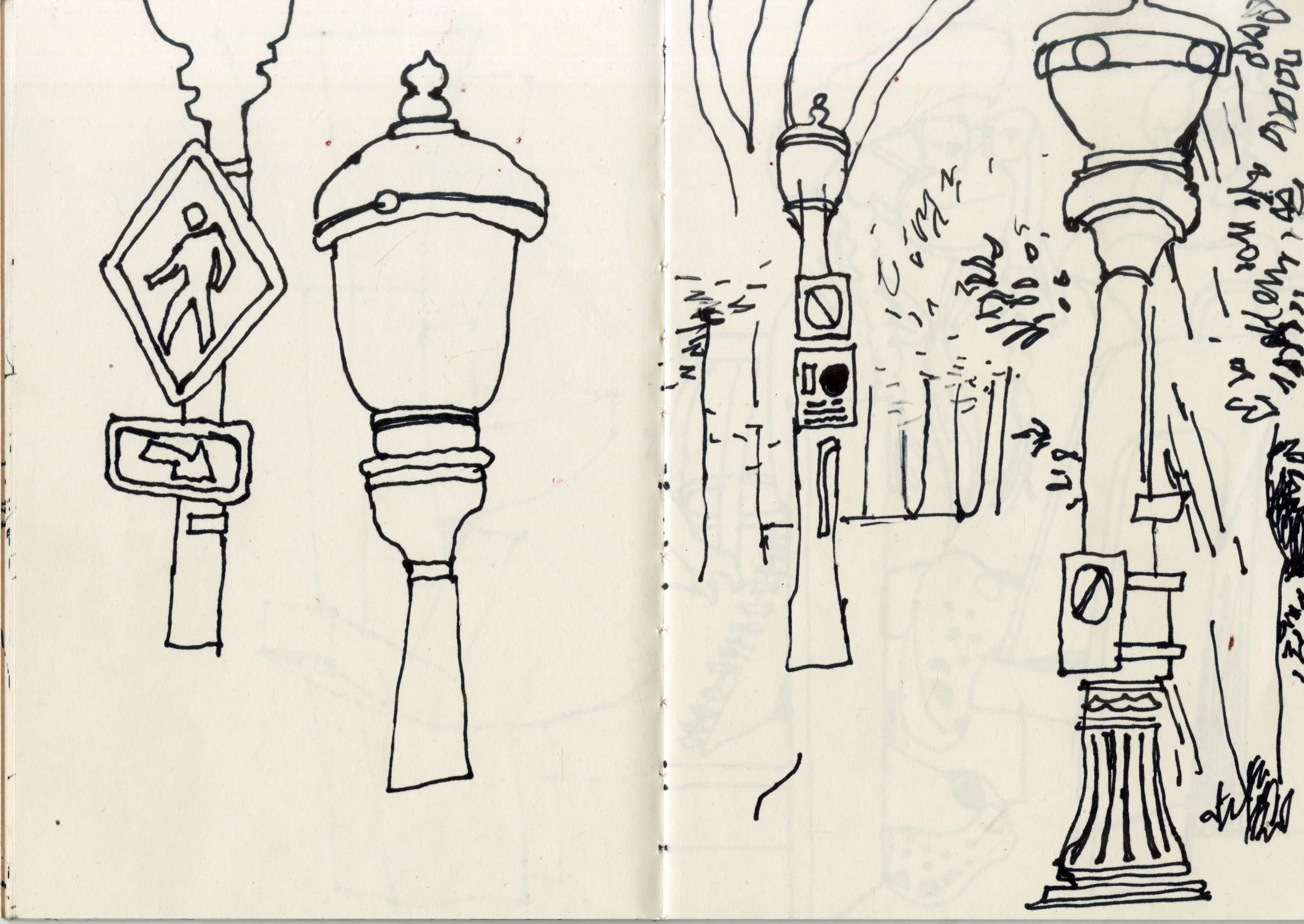
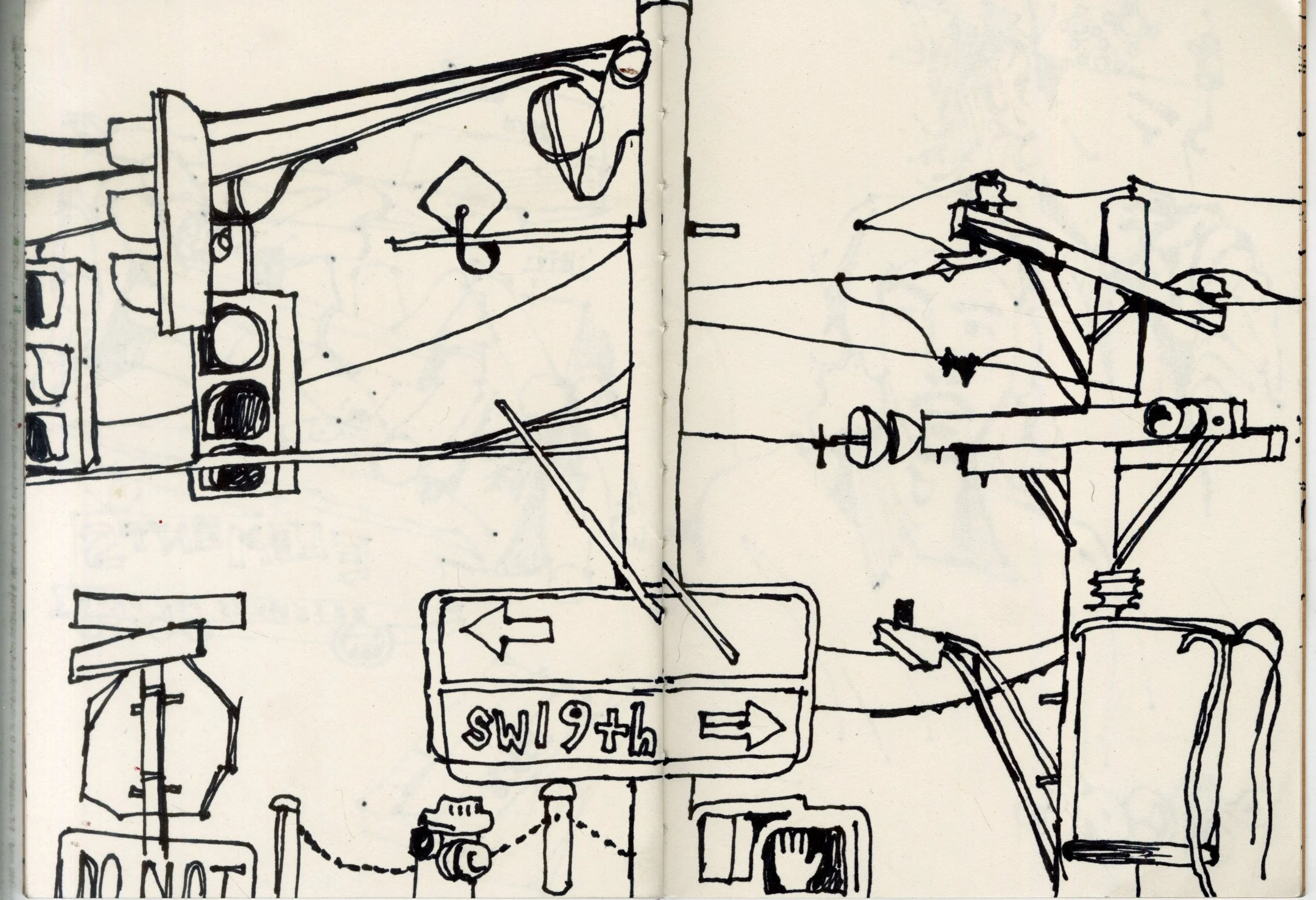
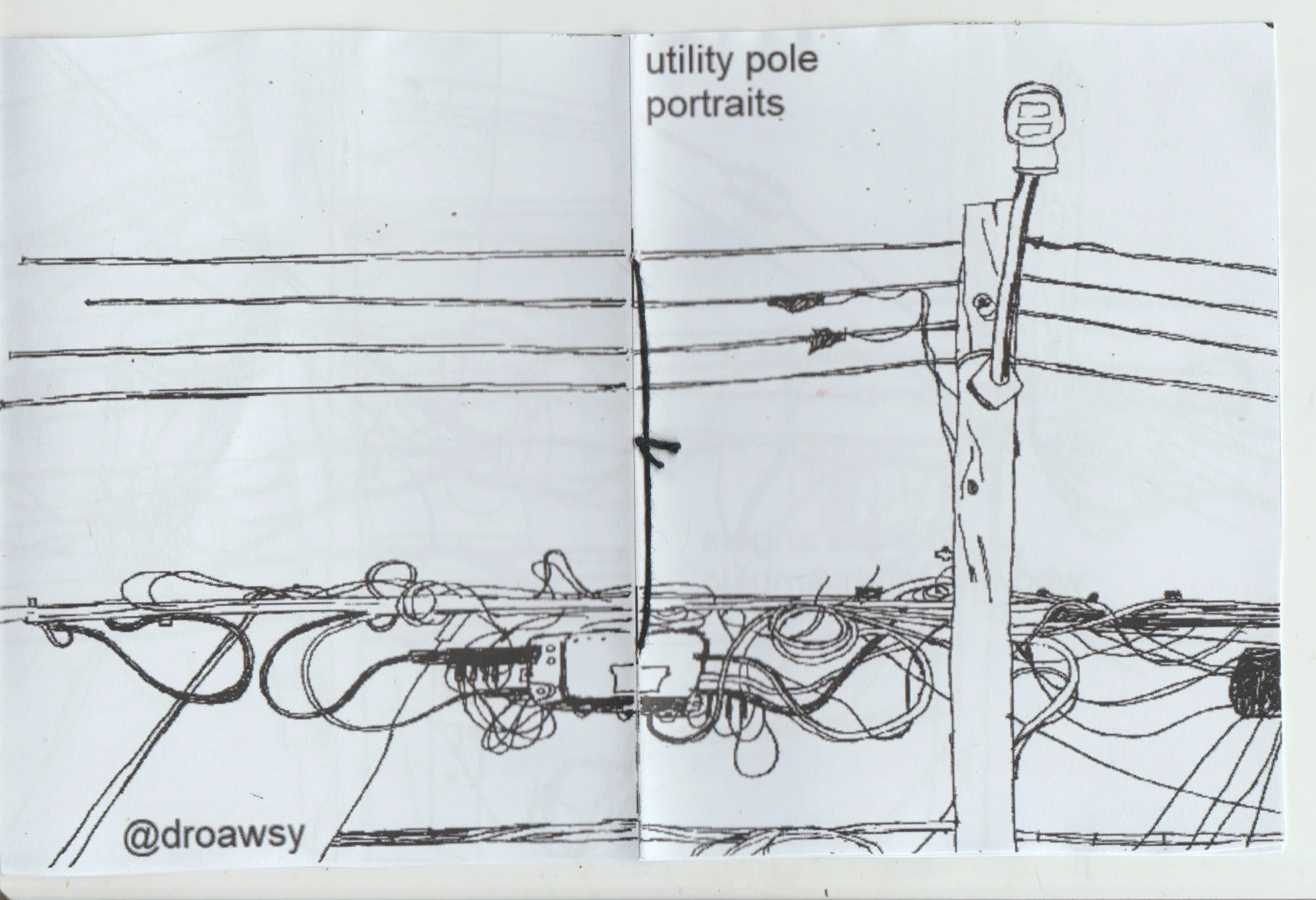
“Anything can be comics”: in conversation with DROWSY
MISTER: I have to say, preparing for this interview was a trip. There’s so little about you online. It’s impressive. I kept asking myself: how do I write questions for a non-person? It was a fun challenge.
DROWSY: Thank you for saying that. Honestly, that's what I aspire to. A state of non-personhood.
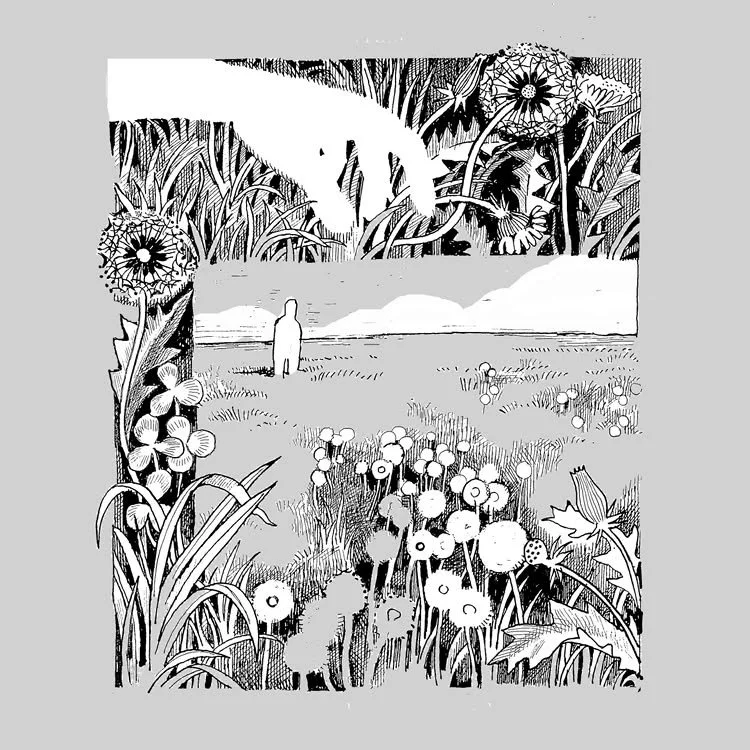
MISTER: Why do you opt for anonymity?
DROWSY: In part, it comes from a place of wanting people to engage with my work more deeply. But I’m also not sure how anonymous my persona really is. A lot of my art is autobiographical, and in a sense the details I share are the parts of myself that I want to be seen, that feel most vital to communicating the person I am in the world.
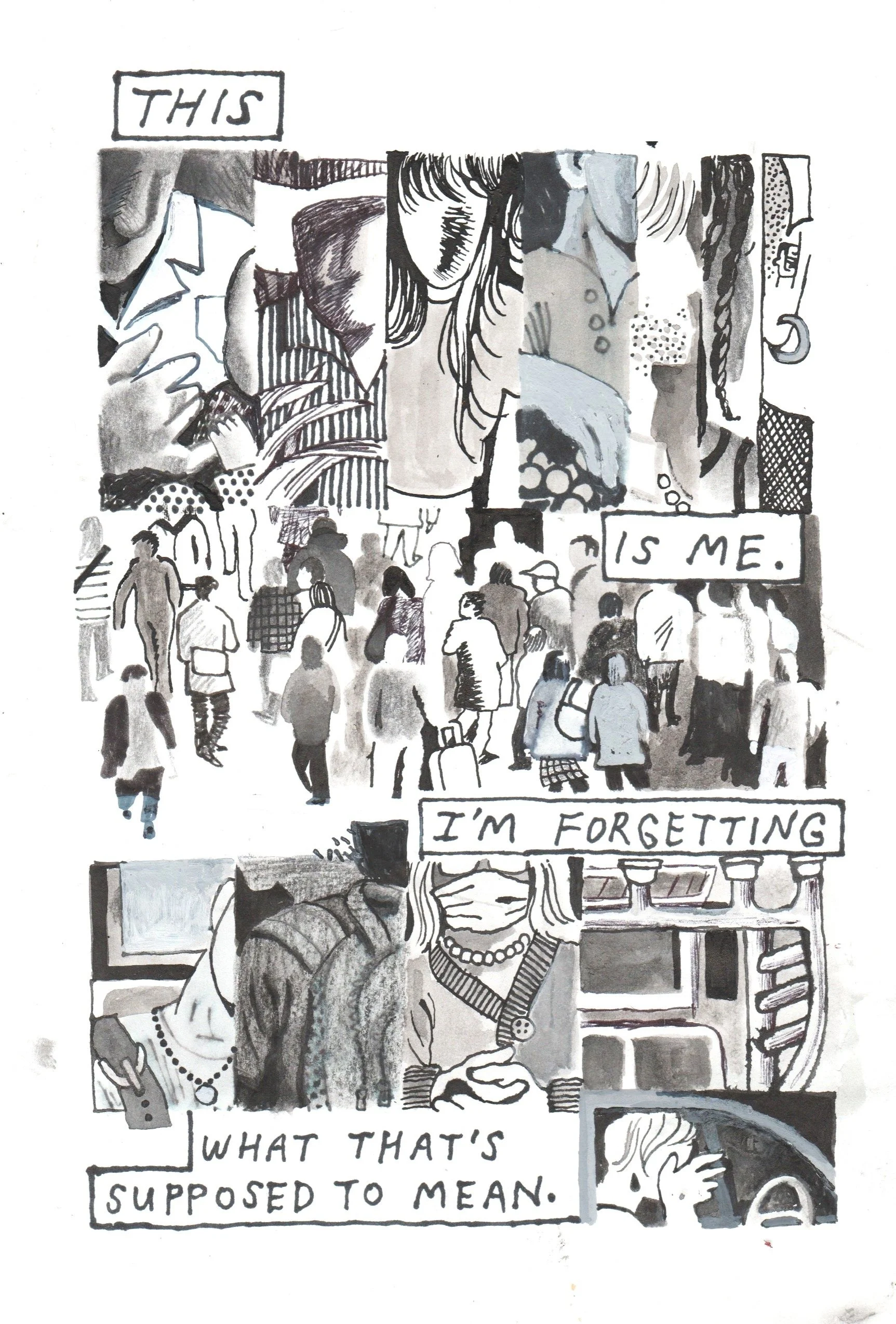
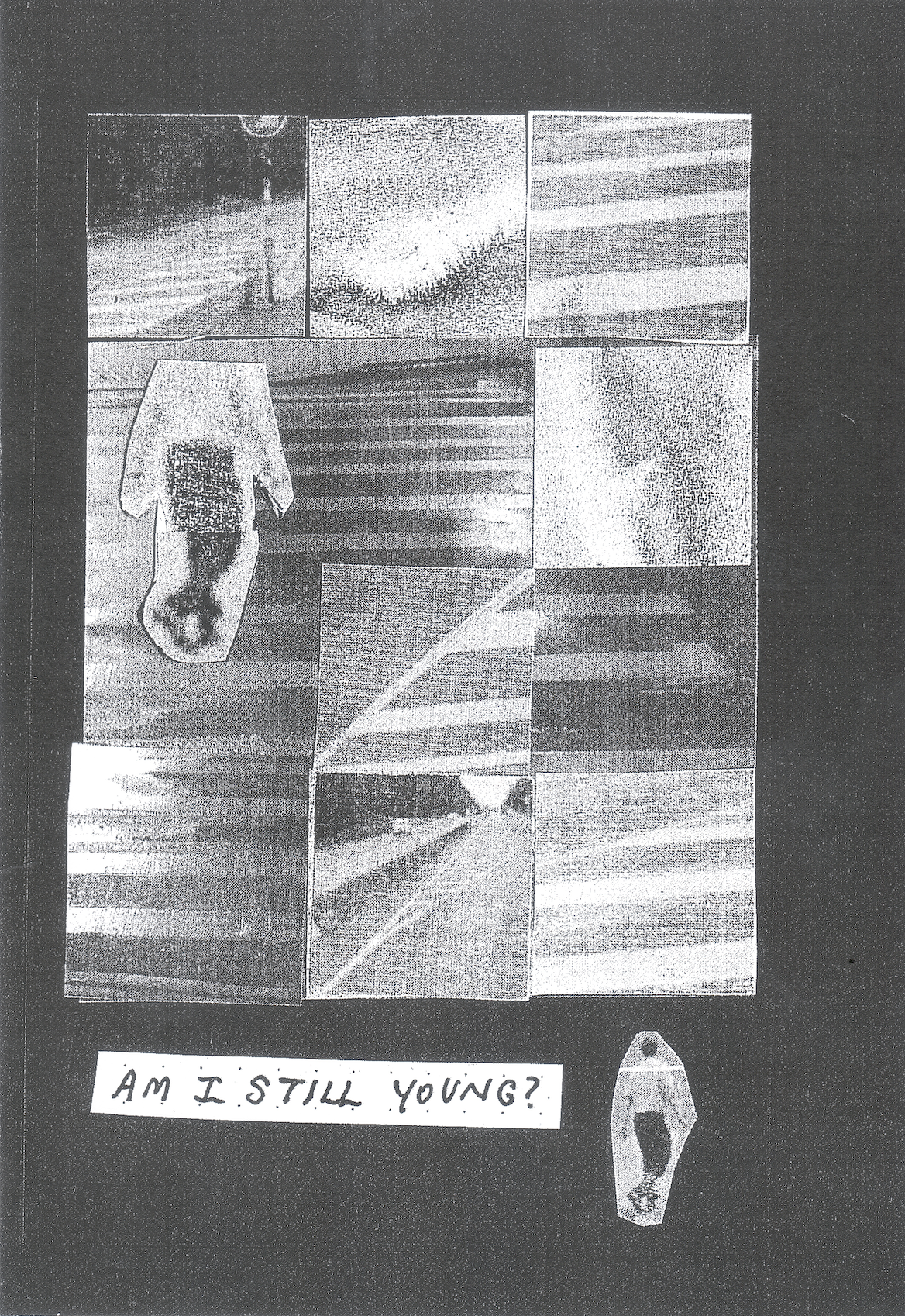
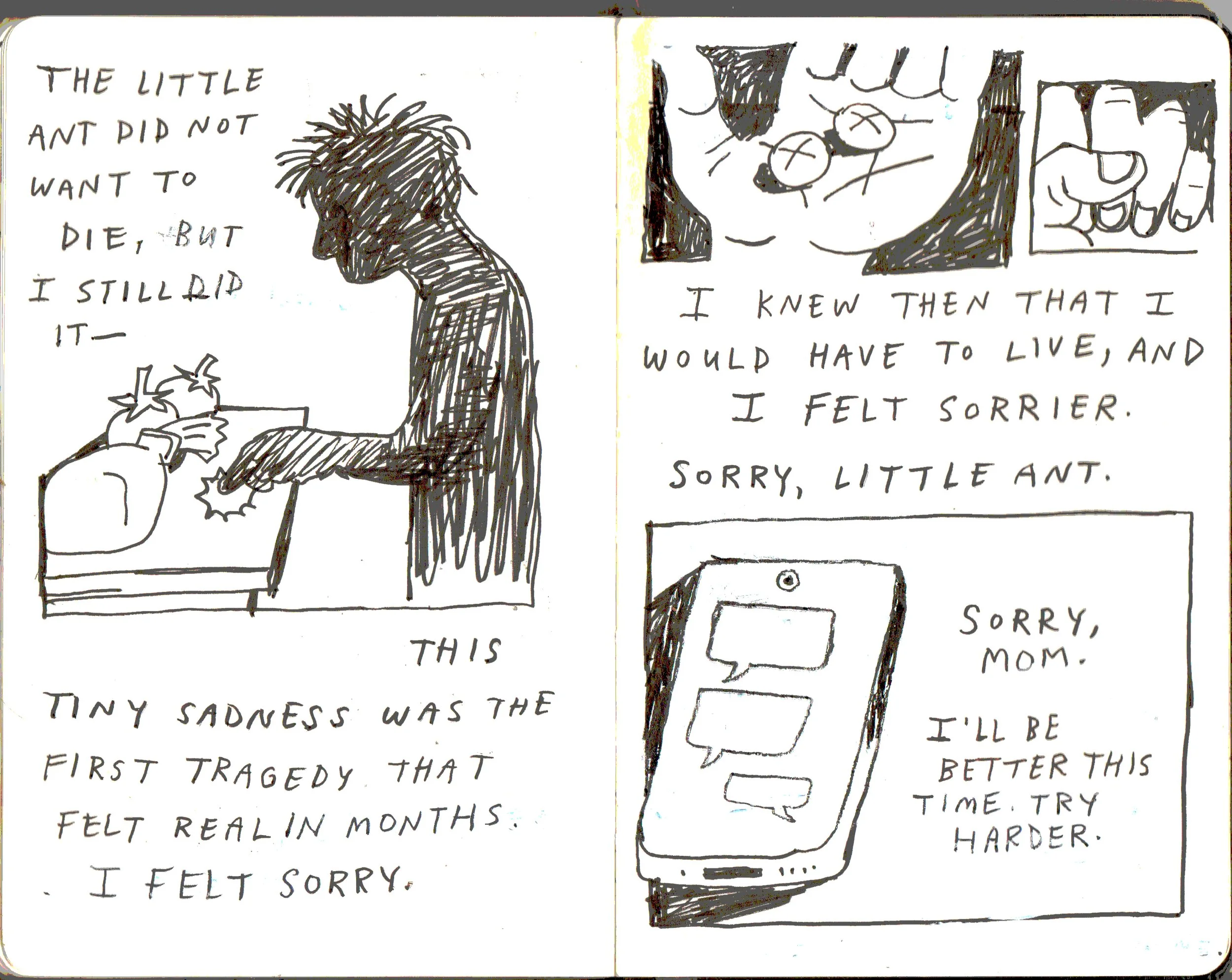
MISTER: Is there any part of yourself that you want to communicate here?
DROWSY: What’s relevant…I love my cat. I like to read. I like to feed pigeons. I like to smoke cigarettes.
MISTER: What do you read and what do you smoke?
DROWSY: Marlboro Reds, maybe half a pack a day. And science fiction.
MISTER: I’ve never met someone who reads half a pack of Marlboro Reds a day.
DROWSY: Ha.
MISTER: Your work moves omnivorously between painting, ink, sketches, and tattoos. Do you have a home base? Or is the roving the point?
DROWSY: I don’t know that I can help my roving. A few years ago, I was drawing portraits at a little table in Union Square. An old guy came up to me and started looking at my art, and finally said: “You know what this is? This is a compulsion, isn't it?” And I was like, Shit. It really is, isn’t it?
MISTER: It kind of has to be, doesn’t it? New York seems to reward compulsiveness. Tell me more about growing up in the city.
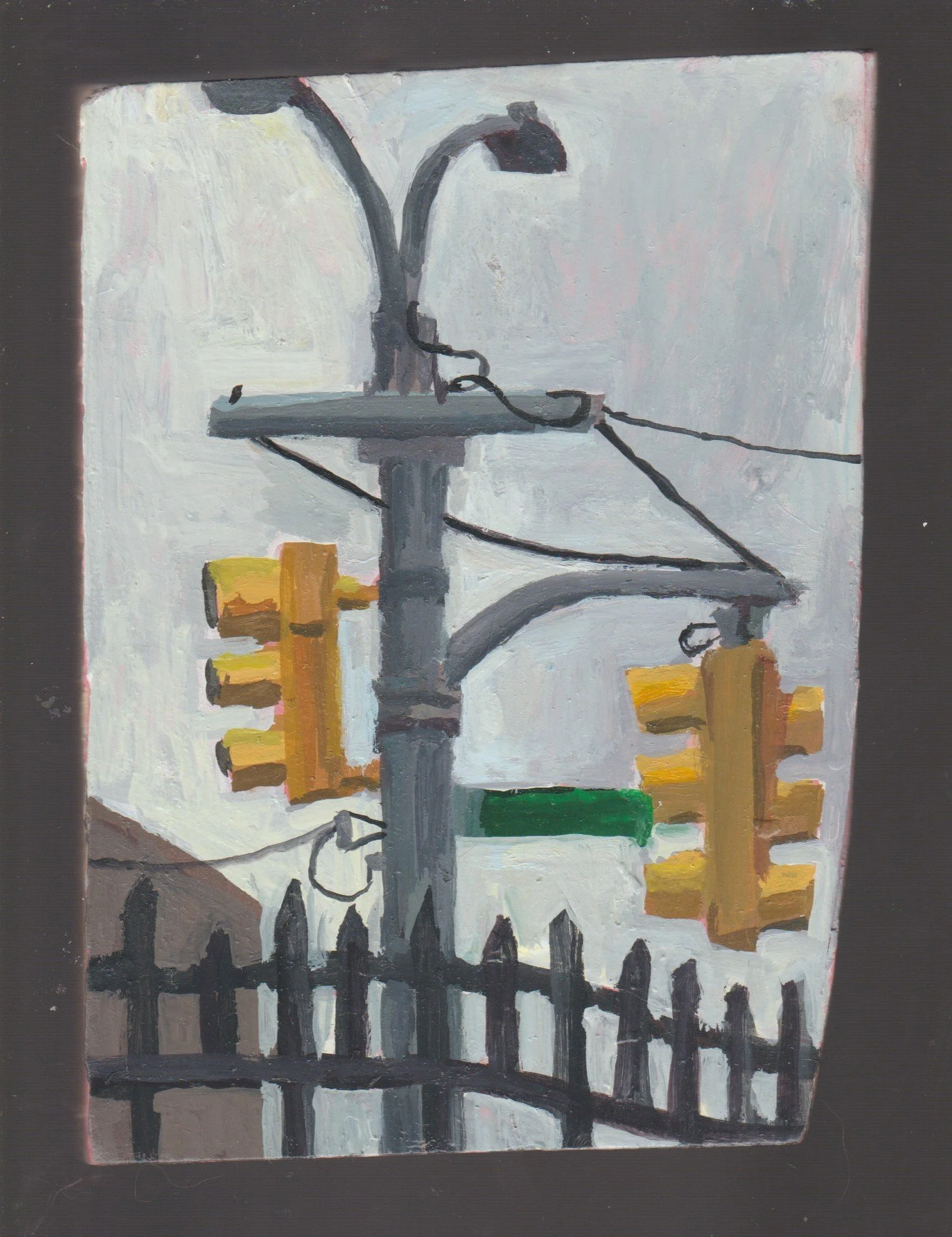
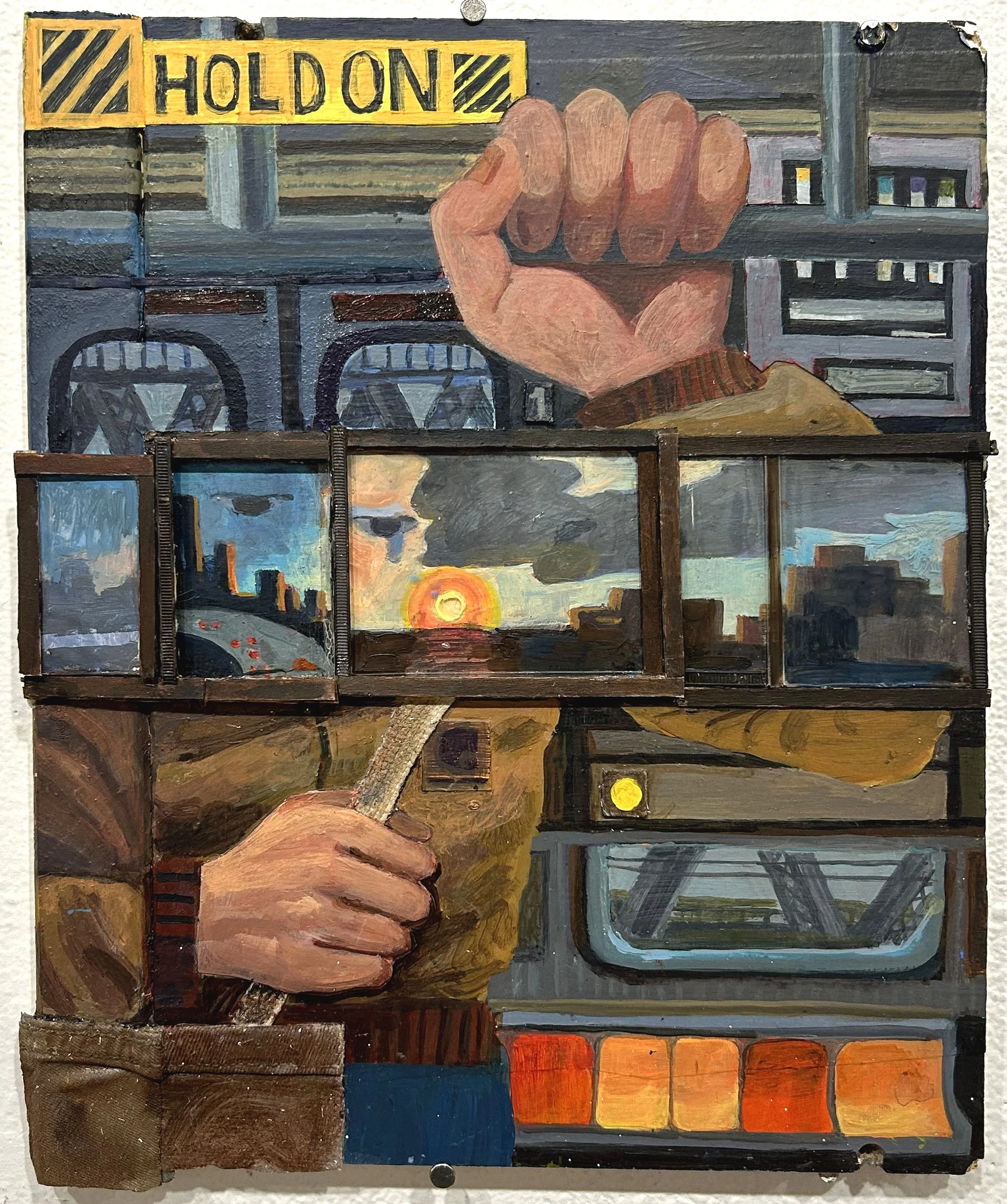
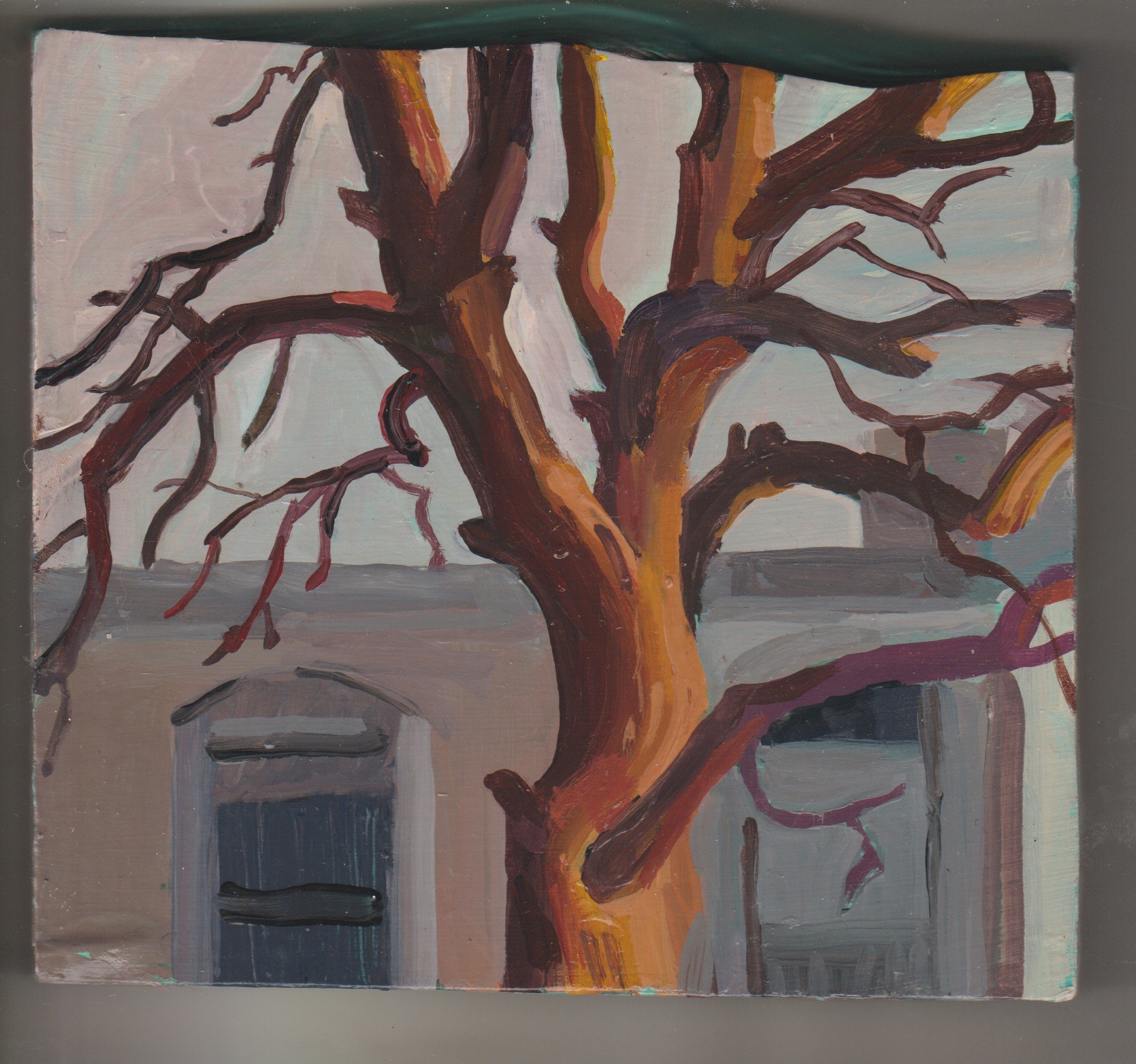
DROWSY: For the first 19 years of my life I rarely left the city, but I found great beauty in the world around me. Growing up in urban space, you’re impoverished of the kind of landscapes that stereotypically stir feelings of awe. But still, the mind is so hungry for it. You search for it. I’m fascinated with how we build mirrors of nature in urban space, sometimes so diligently that it replaces it. New York is a green city in some places, and a barren city in others. That barren quality gives me a feeling of…well, it’s not quite happiness. It’s technically a sad feeling. But I quite like its sparseness, in the same way that I prefer the calm, clean winter to the green chaos in spring.
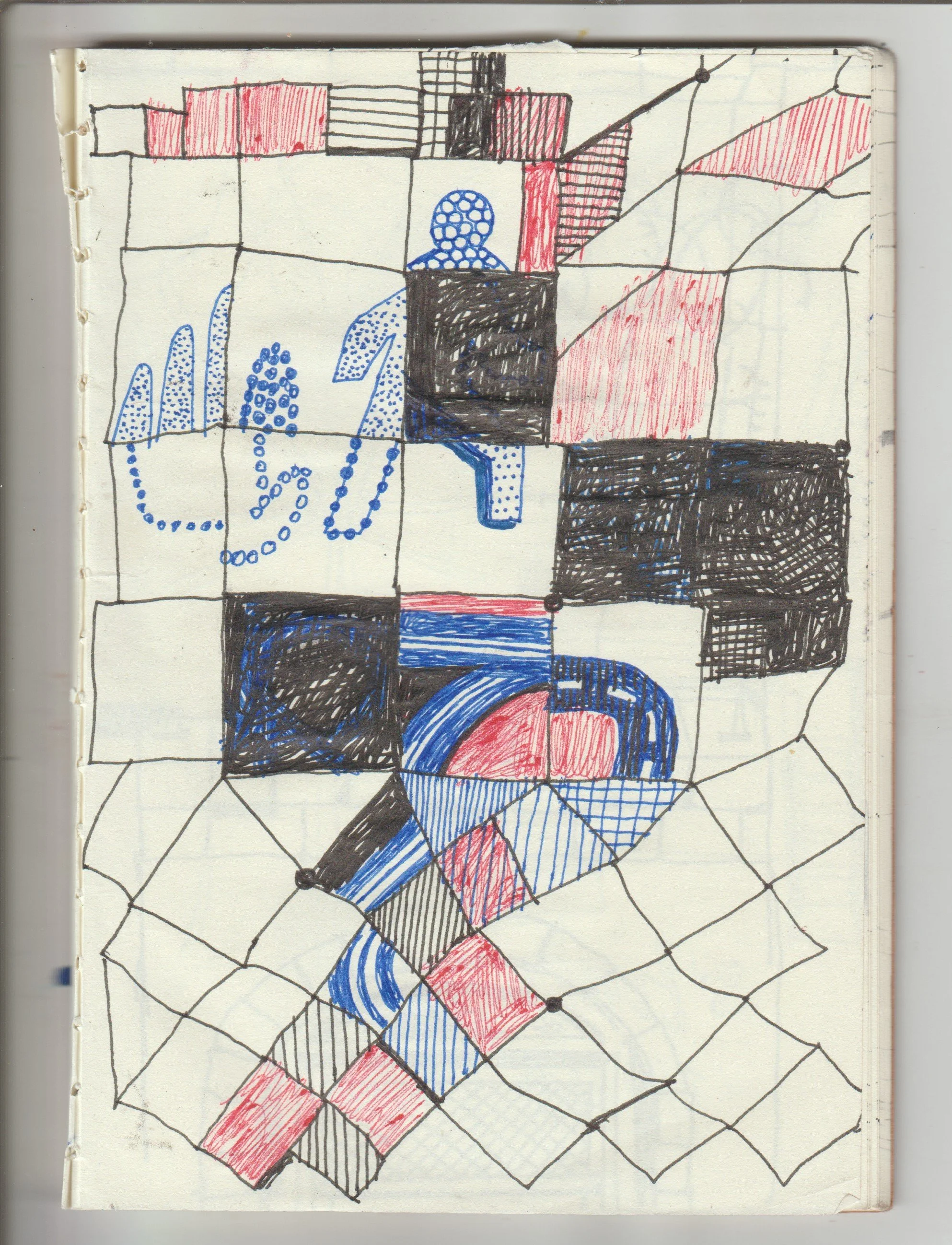
MISTER: One of my favorite visual motifs in your work are the architectural grids that interact with more organic forms. They remind me of city blocks, or windows shaded by trees. Or comics, I suppose.
DROWSY: A friend of mine from Tennessee once told me that New York drove them crazy because you can’t meander anywhere: you have to go in straight lines wherever you go. And I realized I’d never have thought about it that way.
I guess it’s also important to say that the grid, the streets, they remind me that anything can be comics. A map divided into boxes: that’s comics. Windows in houses: that’s comics. Each puzzle piece in a puzzle: that’s comics.
MISTER: Once you see it, it undergirds everything. It’s a lovely way to see the world.
DROWSY: Exactly.
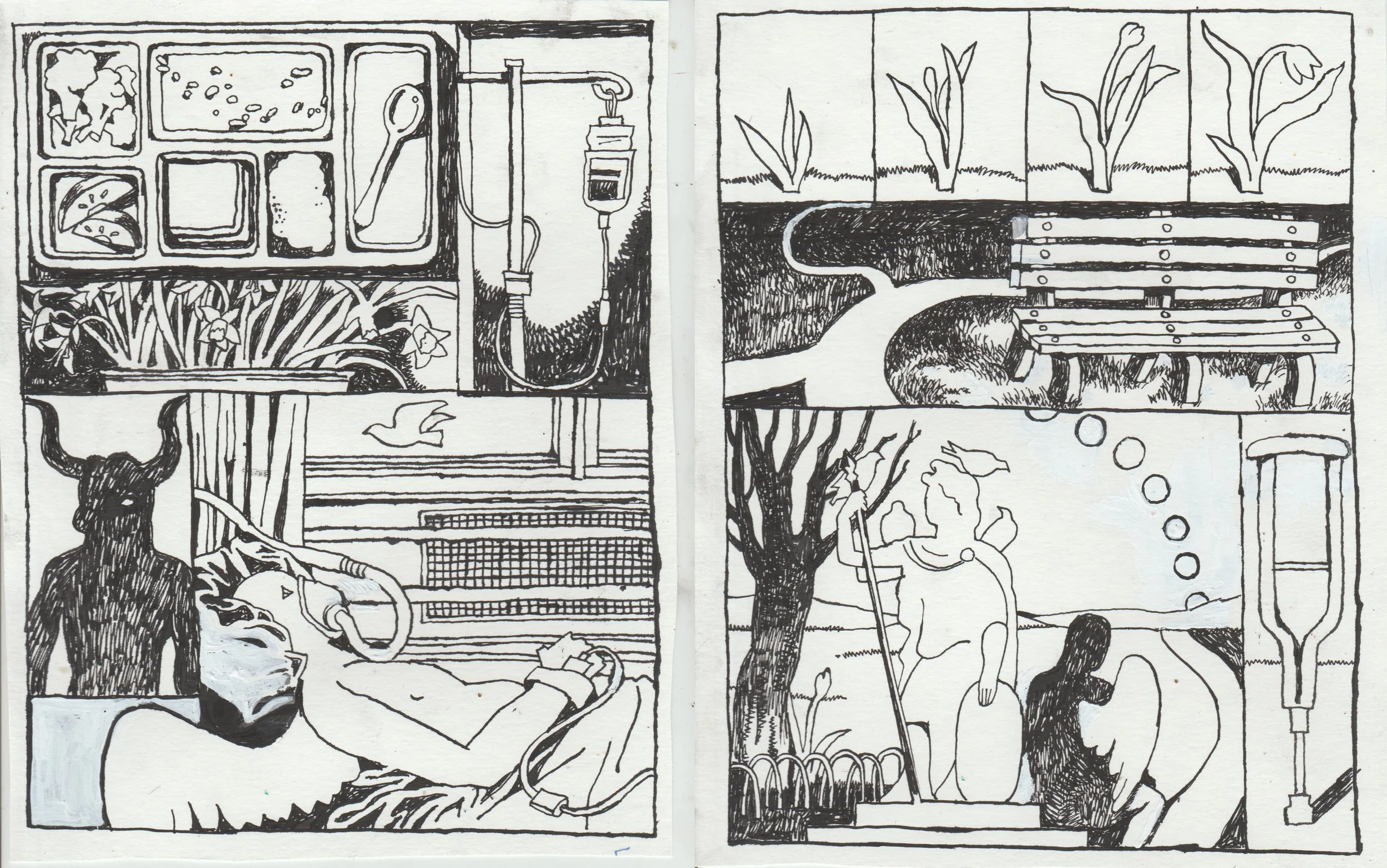
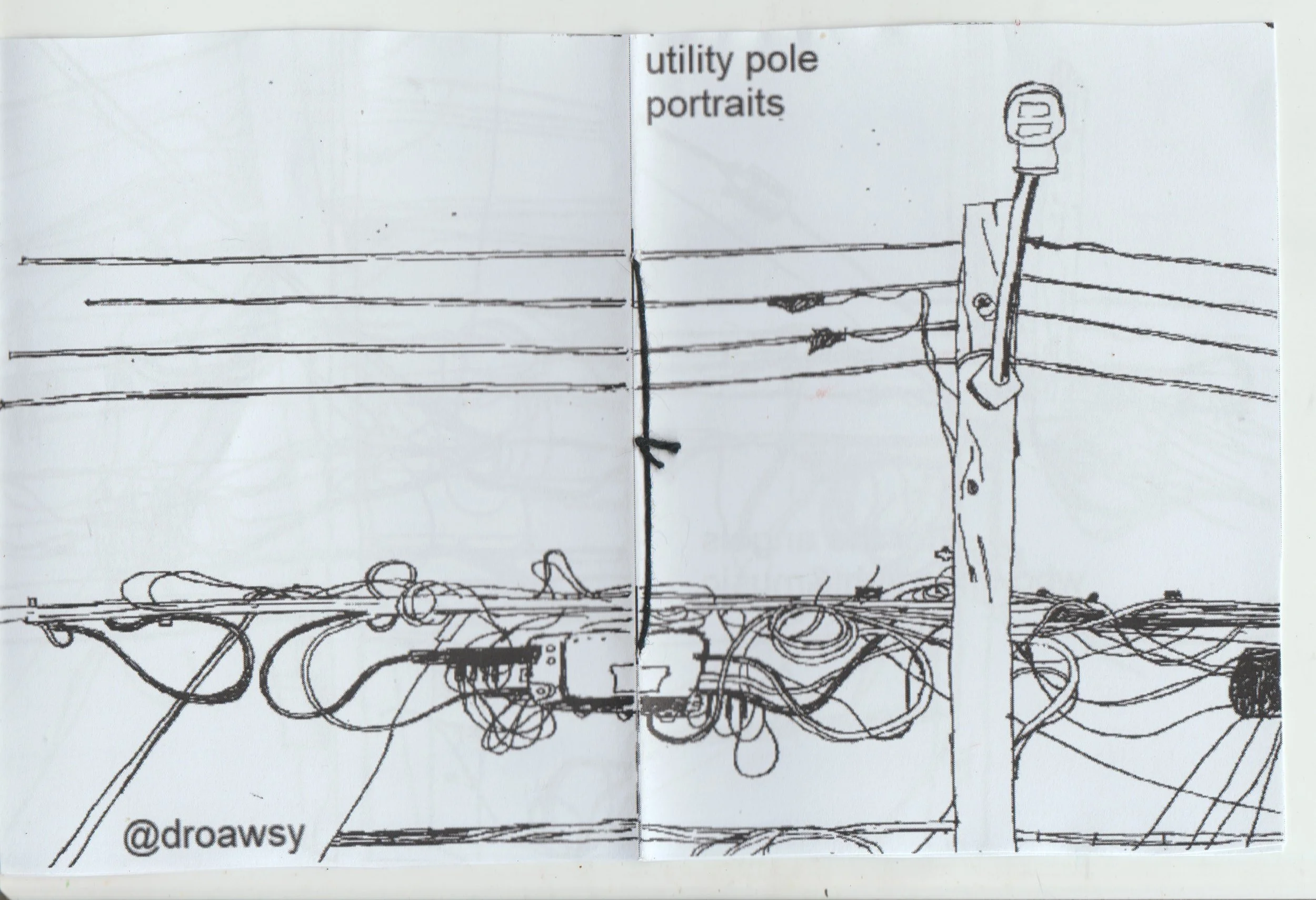
MISTER: Following your friend from Tennessee, I’d like to ask you whether you give yourself room to meander when you make comics. Your comics feel…well, meandering isn’t quite the right word. I’m thinking of I’m On Fire. It’s propelled by something, but it doesn’t travel in a straight line. Do you plot them ahead of time? Do you let them move you as you write?
DROWSY: It depends. For shorter projects, I can plot very lightly. I’m On Fire came together in pen, in my sketchbook, over the course of less than a week. I’m currently working on a project that is going to be well over 200 pages, which I scripted out page by page. With all comics I make, though, the idea has to germinate for quite a while before I make the first drawing.
As for meandering…I think it’s less about plot and more about creating a kind of compositional rhythm. I’m trying to create a certain flow in everything I make, a certain rising and falling. Even when I’m drawing or making a painting, I try to be sensitive to its compositional flow. It needs to feel balanced. It needs to feel correct. But I’m typically not thinking about the narrative arc.
MISTER: What do you mean by correct?
DROWSY: I guess it’s hard to say. We were saying earlier that anything can be comics. I started making comics in middle school. You start to notice that there’s a more or less prescriptive formula to classic comics, one that is incredibly tempting to reproduce. So that’s one way of seeing correctness. But I also love things that push what a comic can be.
I think correctness, to me, is making something that manages to transmit a particular feeling, that communicates well enough to put someone in the same state as you and invite them to meet you where you are. Or where you want them to be.
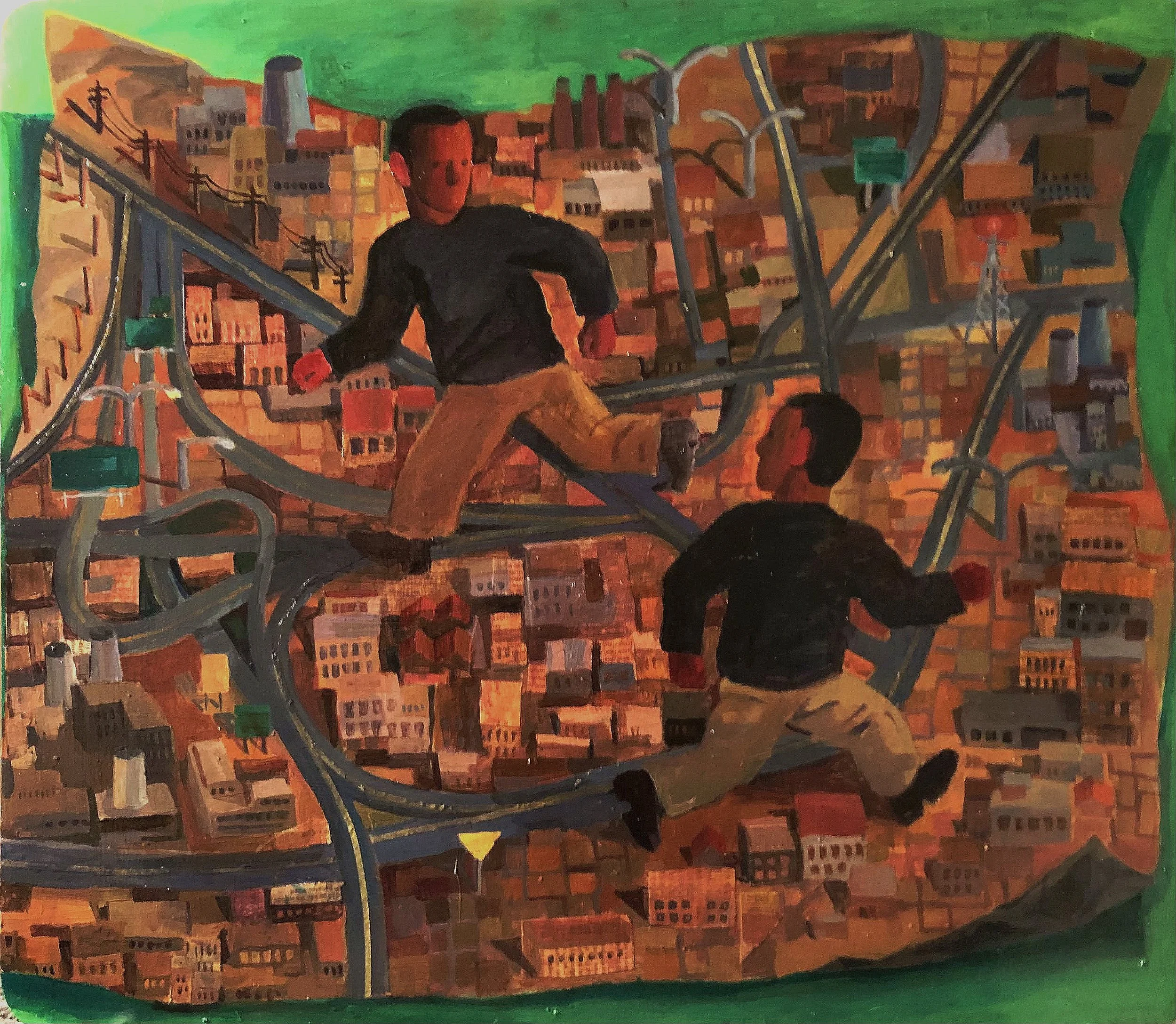
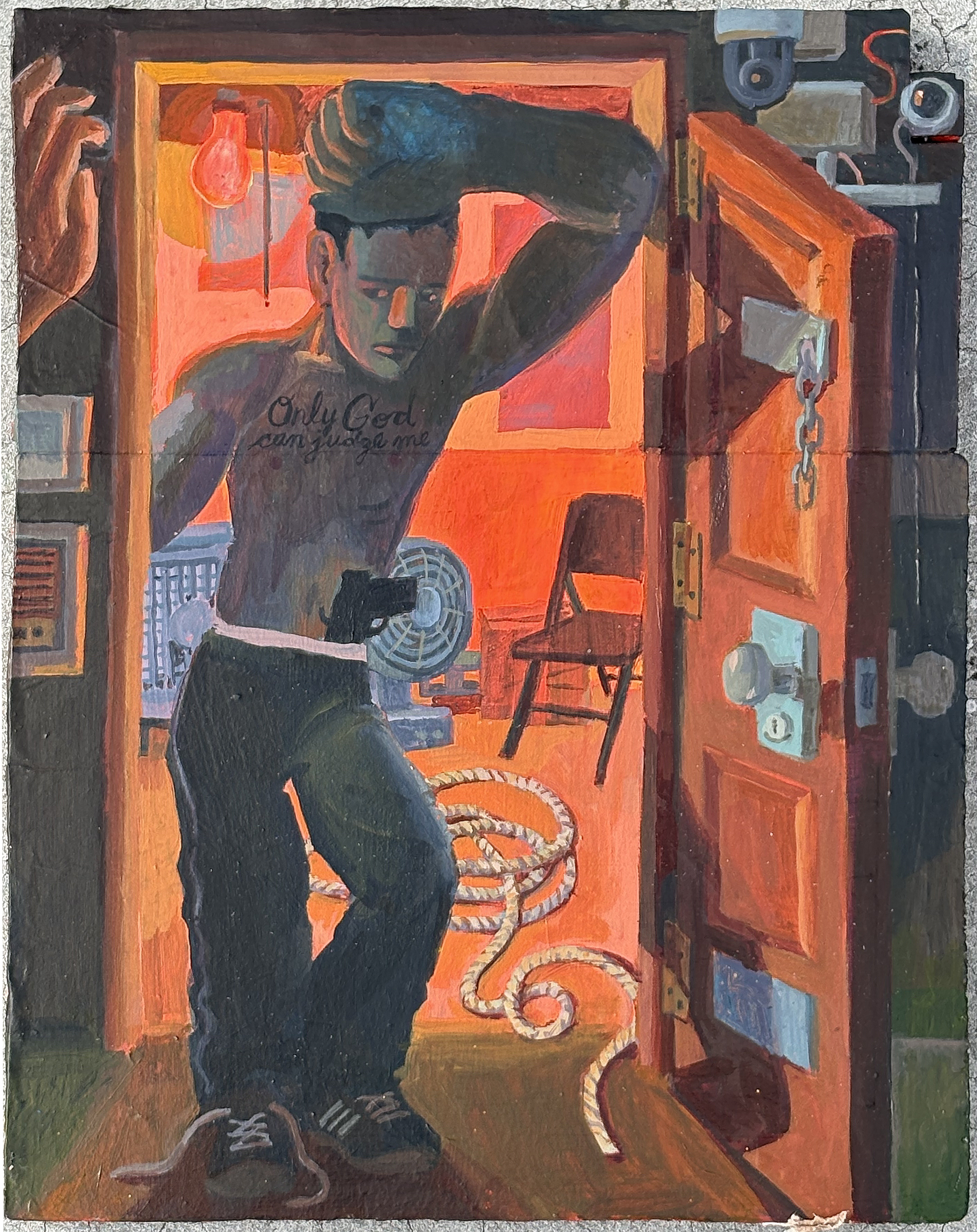
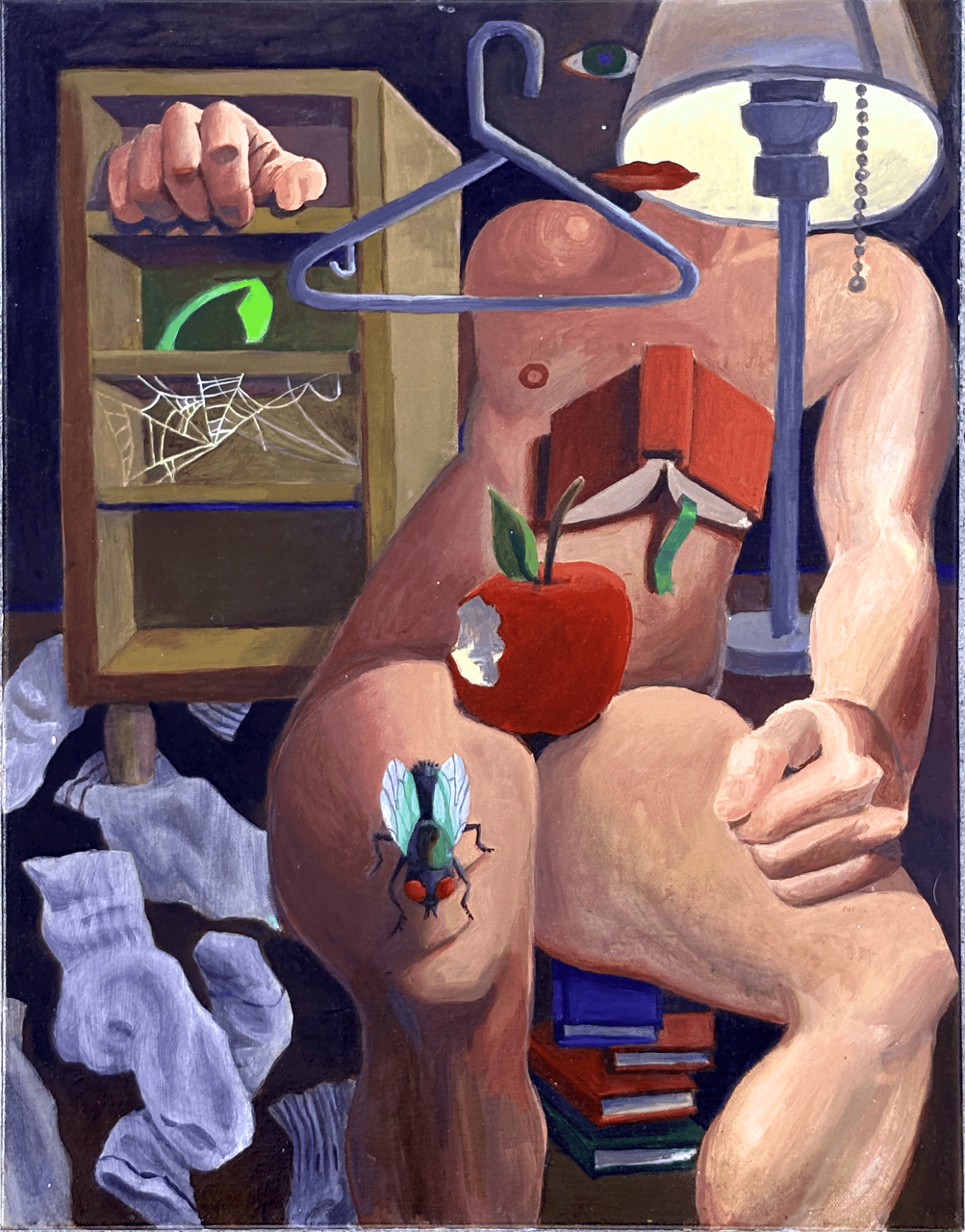
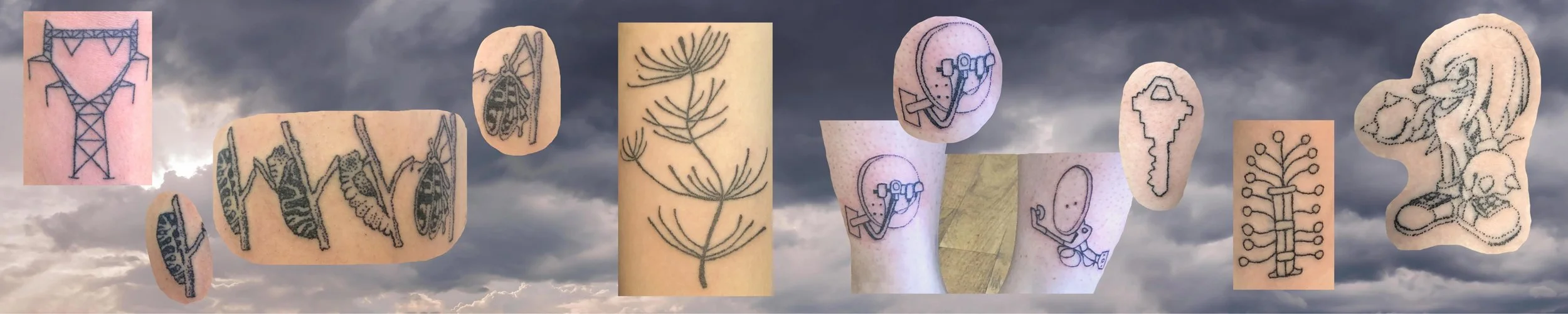
MISTER: I’m curious how this way of thinking connects to your practice as a tattoo artist. Talk about altering someone’s body, someone’s life, someone’s self-perception, in a small but concrete way!
DROWSY: It's a departure from my normal work in many ways. It’s a collaboration between you and the other, whether you're making a custom design or forming it to their specific body. It's refreshing. When I tattoo, I’m not just making art because of a story that I want to tell or because I feel a certain kind of way. It's a service. It's like a deeply meaningful service. And it's very humbling. It can be so high pressure, in the way that pressure provides a call to respond to. I think it has been pushing me to grow as a person, to study a craft that's unfamiliar to me.
MISTER: Can you tell me about the first tattoo that you gave?
DROWSY: [Laughs]. So, I’d lost my job. I sublet my apartment because I didn't want to pay rent. I stayed with a friend in Philly, and then on to Arizona, North Carolina. I’d just gotten my blood safety license from New York State, and I wanted a low stakes way to practice my skills on someone other than myself. And, well…I made a post on Lex. I was like: if you buy me dinner or a pack of cigarettes, I’ll give you a stick n’ poke. I gave a bunch in Philadelphia that way. I got fed, I smoked. I did some for my friends in Arizona, I gave one in North Carolina. And when I finally got back to the city, I was ready to start booking.
MISTER: It’s like The Odyssey but on Lex. Which segues somewhat strangely into some questions I have for you about growing up as an artist in DIY spaces.
DROWSY: Frankly, a lot of my community work is a form of opposite action. It’s truly hard for me. Cartoonists are famously neurotic. We spend a bit too much time alone looking at a sheet of paper. But thanks to these DIY spaces, I’m close to such incredible people who draw me out bit by bit. Like my friends who organize shows. It’s so deeply inspiring. Being inspired by other people, making art in conversation with them, accepting help and guidance where you need it…there comes a point when you have to get over yourself as an artist. Even if you’re antisocial or suspicious or scared, you have to do it.
MISTER: Tell me about your Drawing Club at the diner. That seems like a pretty direct call for artists to, well, get over themselves and get connected in real life. How did it come to be?
DROWSY: I’ve worked in food service since I was a teenager. It remains more or less the only way I can count on getting a steady paycheck day to day. I’d been searching for a job for some time when I found this one—they’d advertised that they wanted an events organizer, someone artistic, so I sent over a portfolio.
When I got hired, the owner mentioned that he liked my art. It was nice to hear. Generally, when you work in food service, that owner’s like: “Oh, you’re a poet, you do standup, you’re an artist—I don’t give a shit!” I took over the club from another employee a while back, and its provided a nice synergy between my career in food service and all the rest. Making money from selling your art is one thing, but it doesn’t always sit right with me in terms of the systems around it, the games you have to play. I often reflect on what I want out of an art career, and at the end of the day, it’s about bringing people together, making art together, connecting over it…
MISTER: Would you say your career in food service contributes to your practice?
DROWSY: [Pause] I wouldn’t say so, no. But it’s an interesting question. My artistic process is really a solitary thing. It always has been. It’s so cathartic, so rooted in communication with the self that sharing it with others often feels vulnerable, even counterintuitive. But when I’m working in food service, I have to step into this posture of someone more outgoing and external. So while the archetype of the Solitary Artist feels more true to me, I guess my career in food service challenges me to abandon that idea. Making art isn’t selfish. It’s human and important. It’s a tool to communicate.
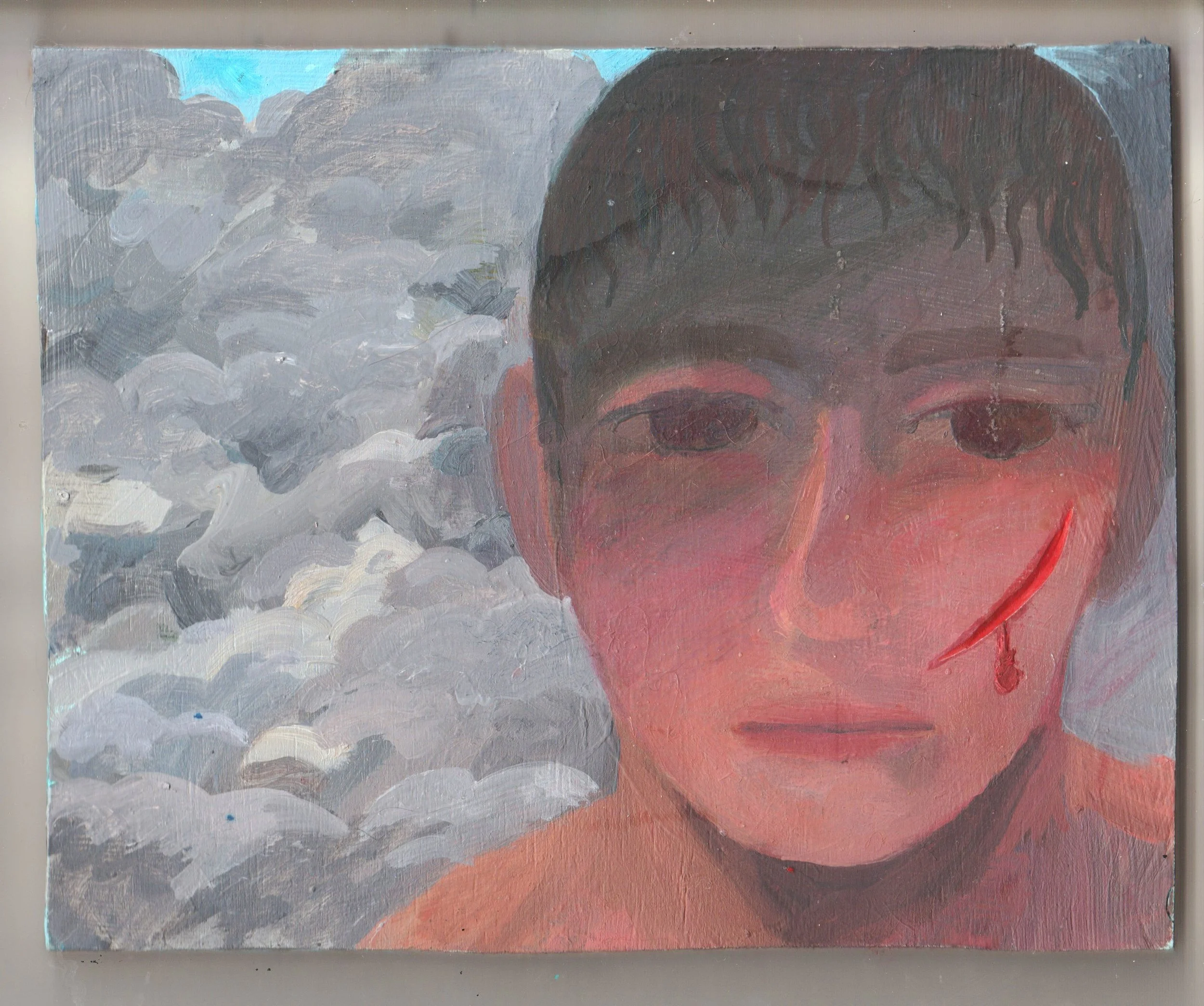
MISTER: But do you really have to abandon the Solitary Artist to be in community? The solitary artist can still send out an echo, a call and response. You can send a signal out into the world and listen for what comes back.
DROWSY: That’s a nice way to think about it.
MISTER: What’s next for you?
DROWSY: I think I’m ready to tease my upcoming comic. I’m far enough long in the development process that I feel certain it’s going to happen. It’s a departure from the sequential art poems I’ve been making over the past few years: it’s science fiction, it’s got characters, it’s got a plot.
MISTER: I’m looking forward to reading it.
DROWSY: Ha. Me too.