The Fragmented Rosary of Los Angeles
Every day of winter break,
I wake up and pray
the rosary of Los Angeles,
gently tugging the Prius from
bead to bead,
from Burbank to Sherman Oaks
to North Hollywood to Echo Park
and back again.
I spend decades in traffic,
weaving patiently and prudently
through the reticulated roadways
that string each bit of clay together.
And at every stop,
with every familiar face,
I hold the pliable earth between my fingers,
rollingspinningtwirling
that little sphere of memory
until I find its terracotta
crusted in the ridges of my fingerprints.
It will sit on each furrow
until it is too small to even see,
silently but significantly eroding
each time I say “home,”
but mean my college town
400 miles away.
For the past forty-five years, the California license plate pattern has been 1AAA000—but we just ran out of all possible combinations. In March 2026, the last viable amalgamation was issued, and then the format flipped.
I don’t really believe in horoscopes, but for me, the license plate numbers being mirrored feels like the planets are reversing their orbit. I know the end is near when even a short drive on the freeway is full of petty omens, stamped in the haunting shapes of 9Us and 9Ws. It’s my personal Y2K; although unfortunately, 9ZZZ999 is a garbling mouthful with no value for vintage resellers.
There is, however, something soberingly dystopian about how fast we’ve burned through that colossal number of combinations, as each title is tied to a unique, newly registered commercial vehicle. There is also something more viscerally disconcerting that since 1947, every single California plate has been produced by people incarcerated in Folsom State Prison. They make about fifty thousand plates each day, with some workers on as little as fifty cents an hour—and that’s before they have to give away up to eighty percent in taxes, room and board, or other fees.
There’s a lot of reasons that forced car dependency makes me nauseous with despair, but this is a whisper in rapid crescendo: the exponential upward crawl of punched-out plates, a familiar seal of corporate corruption in urban planning, the prison factory that will be the first to witness the character shift, future sequences of 000AAA1 gleaming, refracting, slugging through highways that displaced and destroyed vibrant, long-standing Black and Latino neighborhoods six decades ago.
I tell my sister the first half of this on a drive back from a family friend’s in Los Feliz. She helps me count the 9s as we pass through the suburbs, then says all she can see are the cars making faces at her—headlights and grills twisting into joy, impertinence, anger.
Do kids in a gridlocked city first discover pareidolia in the cottons of clouds, or in the pointed glare of mom’s Chevy Suburban?
Dull metal boxes
gash deep wounds
through a splintered city
clotted neon red
I still love Los Angeles, or I still like Los Angeles, or Los Angeles is still home. The people in those cars, who become the people out of those cars, make it worth it every time. I throw a peace sign and a matching grin to an exhausted construction worker, who is yelling and frowning as he funnels frustrated traffic on Barham. His face instantly melts to reflect mine, clenched fists easily drawn into two thumbs-up, and I am blushing in the bumper-to-bumper for miles down the road.
In between heat waves radiating off baked asphalt and steel exteriors, distortions vibrating in the open air—the rest of the procession in a standstill—all I can see are the people making faces at me. A glance out the passenger window reveals eyebrows and teeth curving into warmth, focus, resistance.
Consider, closer: Friends’ parents whose initial check-in questions in the kitchen pull me into conversations hours-long—Angelenos who, two decades ago, knew there was something special about raising children here. A local band scene my friends and I have followed for five years, $8 concerts for young musicians who have become some of our favorite artists ever. Neighbors who carved a gate into the fence between our backyards so we could stop by anytime; their daughters babysat my sister and me, and now we babysit their grandchildren.
Somewhere in Folsom, the future is already being punched out, one plate at a time, fifty thousand small prophecies a day. Coded, aligned, inscribed on a manufactured tabula rasa—blank and unquestioning, but for that familiar lipstick cursive—by hands that cannot touch the roads they name, that cannot drive the vehicles they christen. And farther south, somewhere in the Los Angeles sprawl, a child in a carseat smiles back at the wide-set, sunny gaze of a 2012 Prius, while the driver is wholly distracted by the ominous license plate in front of her.
People in the mirror are closer than they appear.
Works Cited
Cal. Code Regs. Tit. 15, § 8006 – Incarcerated Individuals’ Pay Rates, Schedule, and Movement. Legal Information Institute, Cornell Law School, www.law.cornell.edu/regulations/california/15-CCR-8006.
“Captive Labor: Exploitation of Incarcerated Workers.” American Civil Liberties Union, 15 June 2022, www.aclu.org/news/human-rights/captive-labor-exploitation-of-incarcerated-workers.
Garcia, Karen. “California Is Running Out of License Plate Numbers. Here’s the License Plate Sequence Starting Next Year.” Los Angeles Times, 25 Apr. 2025,
www.latimes.com/california/story/2025-04-25/california-is-running-out-of-license-plate-numbers-heres-t he-license-plate-sequence-starting-next-year.
License Plates. California Correctional Training and Rehabilitation Authority, catalog.calctra.ca.gov/services/license-plates.
Heise, Sarah. “See How Folsom Prison Inmates Churn Out 50K CA License Plates a Day.” KCRA, 13 Mar. 2018,
www.kcra.com/article/see-how-folsom-prison-inmates-churn-out-50k-ca-license-plates-a-day/18785621.
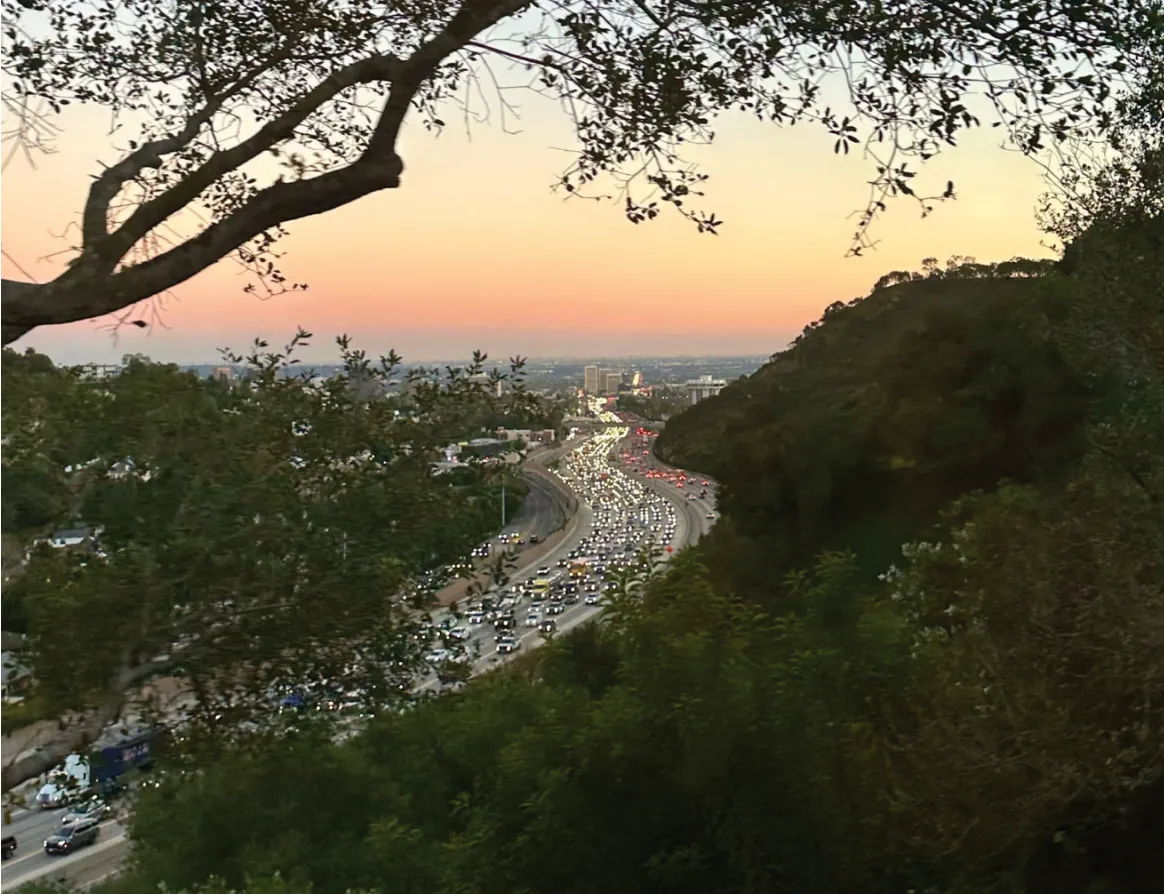
Photo by Macy Wang